





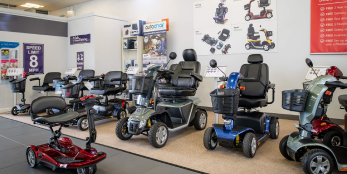


Best Mobility Scooters for Shopping Malls in 2026
My mother called me from Easton Town Center last October, exhausted and embarrassed, sitting on a bench outside J.Crew because her legs gave out halfway through the trip. She'd been there 40 minutes. That's what finally convinced me to get serious about finding her the right scooter — not just a decent one. The right one.
I've been an occupational therapist for 20 years. I've helped hundreds of patients think through mobility equipment. And I'll admit something that should be embarrassing for someone in my profession: I still underestimated how much the wrong scooter could wreck a shopping trip. Not because it breaks. Because it's exhausting in the wrong ways, at the wrong moments, and it makes people feel more dependent — not less.
So this isn't a spec-sheet roundup. This is me telling you what I've actually seen work, what's failed my mother specifically, and what I'd recommend to a friend who asked me point-blank in a parking lot.
Why Mall Shopping Demands a Different Scooter Entirely
Here's the thing most buyers don't figure out until after they've made a purchase: shopping malls are not the same mobility environment as your neighborhood sidewalk. Not even close. Outdoors, you mostly go straight. You adjust for curbs and cracks. You have space. Malls? Malls are a completely different physics problem.
You stop. Constantly. You turn — sometimes in spaces barely wider than your own shoulders. You wait in elevator queues behind strollers and teenagers who don't see you until the last second. You roll across smooth Italian tile in one section, then hit a stretch of plush carpet near the home goods store that practically grabs your wheels and holds them hostage. You reverse — often, and in spaces that weren't designed with reversing in mind.
I watched my mother try to turn her first scooter around inside a Banana Republic. It took four attempts. The sales associate kept smiling supportively, which honestly made it worse. The scooter was fine outdoors. Completely reasonable specs. But its turning radius — about 60 inches — made indoor maneuvering feel like parallel parking a minivan in a compact-only spot.
The ADA guidelines for mobility device access in public spaces establish minimum aisle clearances of 36 inches. That's the legal floor. Actual retail aisles are often wider — but sale racks, seasonal displays, and wandering shoppers make the functional width considerably smaller. A scooter with a tight turning radius transforms that reality. A wide one turns it into a daily frustration.
Speed matters less than you think in malls. Battery range matters less. What actually determines whether a mall scooter works is: turning radius, seat ergonomics, portability, and how it handles surface transitions. That's it. Everything else is secondary.
The Features That Actually Matter (From Someone Who's Watched Scooters Fail)
Let me walk you through what I actually pay attention to now — because it took embarrassingly long to stop caring about the wrong things.
Turning radius — the one number most listings bury
You want this under 50 inches for serious mall use. Under 44 inches is genuinely good. Some folding travel scooters hit 40 inches or below. That number is the difference between gracefully turning toward a fitting room and doing a slow, mortifying six-point turn while a rack of clearance blouses wobbles.
Manufacturers don't love advertising this number prominently. Look for it. Ask about it. If a product page doesn't list it, that's already a mild warning sign.
Seat comfort — not just padding, but posture
A seat can be deeply cushioned and still wreck your lower back after 90 minutes. What matters is sitting angle, lumbar support, and whether the armrests allow natural arm positioning or force your shoulders into a constant slight shrug. My mother has arthritis in both hands — awkward armrest angles make her wrists ache before she reaches the food court.
Swivel seats sound like a luxury feature. They're not. Being able to rotate slightly to reach a shelf, sign a credit card receipt, or talk to someone standing beside you — those small movements add up to a more natural, less frustrating experience over a full afternoon.
Weight and portability — the thing that determines whether you actually use it
Here's an uncomfortable truth I've told patients for years: the scooter you don't bring because loading it is exhausting is worse than no scooter at all. Psychologically worse. It becomes a symbol of the thing you can't do rather than the thing that helps you.
Lightweight folding scooters — the kind you can get into a car trunk without becoming a two-person operation — have changed the entire equation. Folding mobility scooters under 50 pounds exist now that would have seemed impossible five years ago. That matters enormously for people managing fatigue or reduced grip strength.
Surface handling — the thing nobody mentions until the carpet
Mall floors vary. Modern tile sections are easy. Transitional thresholds between stores can create a small jolt. Carpet — especially thick carpet in anchor department stores — creates drag that cheaper motors genuinely struggle with. It's not dramatic. But over two hours, a motor that labors on carpet makes the whole experience feel harder than it should.
Ask specifically about carpet performance. Or find a review from someone who actually tested it indoors, not just in a parking lot.
Storage — because you're shopping, not just riding
A front basket. A cup holder. Somewhere to hang a bag without it swinging into the wheel. These things sound minor until your mother is trying to balance a Nordstrom bag, a pretzel from the food court, and her water bottle across her lap while navigating through a crowded checkout line. I've seen it. It's not dignified. It shouldn't be that hard.
My Top Picks for 2026 — With Full Honesty
I'm going to be clear about something upfront: I haven't personally driven every scooter on this list. I've tested some extensively with my mother. Others I've recommended to patients and followed up with. One I nearly bought before reading more carefully and changing my mind.
I'm not going to rank these 1-2-3 as if there's a single right answer. There isn't. The right scooter depends enormously on who's using it, how often, and what their specific limitations are.

This is the scooter I'd buy if I were buying for myself right now. Not for my mother — she actually finds the seat slightly narrow and the riding position a touch aggressive for her hip arthritis. But for someone who shops regularly, travels, and wants one device that does everything? The ATTO Sport is genuinely impressive.
It splits into two pieces that fit into a mid-size SUV without drama. The turning radius is tight enough for real indoor use. And it doesn't look like medical equipment — which matters more than manufacturers acknowledge. My mother refuses to use anything that makes her feel like a patient. The ATTO doesn't.
It's expensive. Genuinely expensive. And I'll admit I'm not 100% sure the premium is justified over the EV Rider for most people. But if budget isn't the constraint and urban usability is the priority — this one's hard to argue with.

This is what my mother uses now. And I'll be honest — I almost talked her out of it because the automatic folding felt gimmicky to me at first. I was wrong.
At the end of a long shopping afternoon, when energy is low and the parking garage feels 400 miles away, pressing one button and having the scooter fold itself is not a gimmick. It's the difference between an outing feeling manageable and feeling like a ordeal. She uses it more consistently than anything else we tried because the whole logistics chain is easier.
Indoor performance is solid. The frame is narrow enough for Zara, which — if you've been to Zara with a scooter — you'll understand is a genuine milestone. Full specs and details on the EV Rider Transport AF Plus are worth reading if you're seriously considering it.
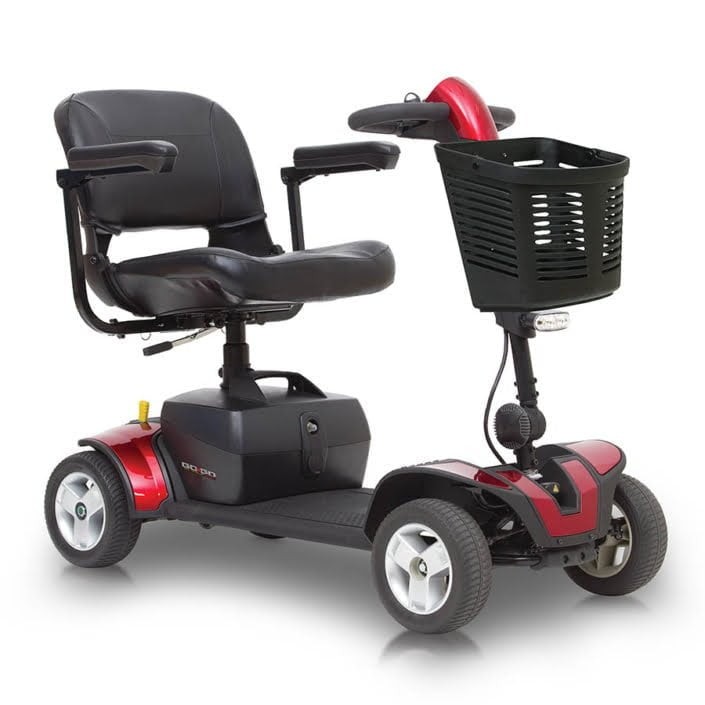
Some people don't want to think about their scooter. They want it to start, steer, stop, and go into the car. The Pride Go-Go Elite is that scooter.
I've recommended it to patients who got frustrated with more complicated systems. Controls are intuitive enough that people figure them out in under five minutes — which sounds obvious until you've watched an 80-year-old spend 20 minutes reading a manual for a device that should feel instinctive.
It's not the lightest. It's not the most compact folded. But it's dependable in a way that earns trust over time, which honestly matters more for long-term daily use than any single impressive spec. Parts are widely available. Customer support for Pride is generally responsive. Those unglamorous facts become very important when something eventually needs servicing.
A few others worth knowing about: the Enhance Mobility Transformer 2 has become popular with people who want automatic folding at a slightly lower price point than the ATTO. And the Golden Technologies LiteRider 3-Wheel is worth a look if you want something built for longer mall sessions with more cushioning investment.
3-Wheel vs. 4-Wheel: The Real Answer
People ask me this constantly. And I keep giving the same frustrating but true answer: it depends on where you spend 80% of your time.
My mother uses a 4-wheel. She has mild balance anxiety — not a clinical diagnosis, just a very reasonable nervousness about tipping — and the psychological security of four contact points matters to her. She'll sacrifice a little turning tightness for that feeling of stability. That's a completely valid trade.
But for pure indoor mall use? Three wheels. Every time. The turning radius advantage is real and significant. If someone's primary environment is crowded stores, food courts, and elevators — a 3-wheel scooter makes those spaces considerably less stressful.
| Scooter Type | Best For | Real Strength | Honest Drawback |
|---|---|---|---|
| 3-Wheel | Indoor malls, tight stores | Tightest turning radius, easiest indoor maneuvering | Less confident on uneven parking lots |
| 4-Wheel | Mixed indoor/outdoor | Better stability, more psychologically reassuring | Wider turning — you'll feel it in crowded stores |
| Folding Travel | Frequent transport, varied destinations | Gets into most cars without drama | Some have smaller seats — test for long sessions |
| Heavy-Duty | Outdoor terrain, higher weight capacity | Built for distance and rough surfaces | Often too wide for real indoor comfort |
Also worth reading if you're still weighing this: the full breakdown of 3-wheel vs 4-wheel scooters goes deeper into specific scenarios.
Mistakes People Regret — And One I Almost Made Myself
The most common mistake I see is buying a heavy-duty outdoor scooter for mall use because it sounds more capable. Bigger battery. Larger tires. More power. It all feels safer. And then the person gets to the mall and realizes they've brought a truck to a farmers market.
Oversized scooters don't just make tight turns difficult — they change how you move through spaces emotionally. You start pre-planning routes through stores to avoid narrow sections. You skip certain boutiques entirely. You feel like an imposition in checkout lines. That's the opposite of independence. It's a different kind of limitation wearing a bigger motor.
⚠️ The mistake I almost made: I nearly bought my mother a scooter based entirely on its battery range and weight capacity. Both were genuinely impressive numbers. But I hadn't tested the seat — and she has hip flexor tightness that makes certain sitting angles painful after about 45 minutes. We caught it during a test ride. If we'd ordered online based on specs alone, she'd have returned it within two weeks.
The second big mistake is ignoring transport logistics until it's too late. You can test drive a scooter on a showroom floor and feel completely happy with it. Then you get home and realize that loading it into your Honda CR-V requires awkward bending, lifting more weight than you expected, and positioning the pieces in a way that doesn't feel repeatable without strain. Enthusiasm fades fast when pre-trip preparation feels like physical labor.
Then there's battery obsession. Some buyers spend enormous mental energy on maximum range ratings — numbers that represent outdoor, flat-surface ideal conditions. Meanwhile they're planning mall trips. Most quality compact folding scooters handle 3–4 hours of indoor mall use without breaking a sweat. Stop optimizing for range you won't use.
And — this one's more delicate — there's the mistake of buying something that looks too clinical. I know that sounds shallow. But I've watched patients use scooters less frequently because they feel embarrassed by how the equipment looks in public. Modern scooters with cleaner, less institutional designs genuinely get used more. That's not vanity. That's behavioral reality.
What Works Best When Mom Shops Alone
My mother goes to the mall alone sometimes. This was... a negotiation. I worried about falls, about getting stuck, about a dozen scenarios that mostly haven't happened. What I've learned is that the scooter itself does a lot of the safety work — but only if it's the right one.
For independent shopping, intuitive controls matter more than any single spec. If someone has to think about how to operate the scooter, they're not focused on where they're going. The best systems feel like extensions of intention — you think "turn left" and the scooter turns left, without a mechanical translation process in between.
Electromagnetic braking — where the scooter slows naturally when you release the throttle — builds confidence in crowded spaces. It feels safer. It IS safer. Particularly in food courts where children appear suddenly from unpredictable directions.
LED lighting matters more than people think for evening mall hours or dim parking garages. So does a large, readable display. My mother's distance vision isn't what it was, and tiny battery indicator icons on some models are genuinely hard to read without leaning forward awkwardly.
Here's a quick reference for what I look for specifically in solo-shopper setups:
| Feature | Why It Matters for Solo Shopping |
|---|---|
| Tight turning radius (<50") | Navigates crowded stores without stress |
| Electromagnetic braking | Smoother stops in unpredictable crowds |
| Front storage basket | Keeps bags off the lap, hands free for steering |
| Large readable display | Battery status visible without squinting |
| LED lighting | Better visibility in dim parking areas |
| Swivel or rotating seat | Easier access at counters and restaurant tables |
| Automatic folding system | Less physical effort at the end of a long trip |
| Lightweight frame | Manageable car loading without caregiver help |
Battery Reality Check (Stop Obsessing Over Range Numbers)
I need to say this plainly because I've watched people make genuinely bad purchasing decisions over it. Maximum battery range specs are measured in IDEAL conditions. Flat outdoor surfaces. Moderate temperature. Consistent speed. No carpet. No stopping every 90 seconds to look at sweaters.
For mall use — indoors, carpeted sections, frequent stops, some inclines — your real-world performance will be lower. Not dramatically. But lower. A scooter rated for 15 miles outdoors might deliver 10–12 miles of mixed indoor use. For a shopping trip, that's still more than enough. Most mall visits cover maybe 2–3 miles of actual movement. You have significant margin.
What actually matters for battery in mall use: consistency, removability, and charge time.
Consistency means the scooter doesn't noticeably lose power or responsiveness as the battery drains. Older lead-acid systems sometimes got sluggish in the final 30% of charge. Modern lithium systems stay relatively consistent until they're genuinely empty — which is a much better experience.
Removable batteries changed daily life for people who live in apartments or can't easily move a whole scooter near an outlet. Being able to pull the battery out and charge it on a kitchen counter sounds like a tiny convenience. It isn't. According to the FAA's lithium battery safety guidelines for passengers, lithium-ion batteries in mobility devices have also become safer and more travel-friendly — which is why airlines increasingly accommodate them.
Charge time matters because people forget to charge overnight sometimes. A scooter that needs 8 hours to fully charge creates anxiety. Modern units often hit 80% in 3–4 hours, which is practically useful.
Malls Are Actually Getting Better at This
Something shifted in retail accessibility over the past couple of years and I don't think it's gotten enough attention. Malls aren't just complying with the Americans with Disabilities Act anymore — many are actively designing for mobility device users because it's good business. The population of people who use or need mobility assistance while shopping has grown. Retail finally noticed.
Wider primary walkways are more common in newer developments. Elevators are better positioned and more reliably maintained. Some premium malls have added designated scooter parking near anchor stores and food courts. I've even seen charging stations near seating lounges at a couple of larger centers near Columbus — which is the kind of detail that makes a long outing feel supported rather than tolerated.
Retailers themselves are adapting too. Wider checkout lanes. Better aisle spacing. Store associates who are genuinely trained to assist rather than awkwardly pretending not to see someone struggling. It's not universal. But the trajectory is real.
The social visibility of scooters in malls has increased dramatically — and that matters because social norms influence behavior. When mobility devices are normalized rather than exceptional, people feel less self-conscious using them. Which means they use them more. Which means they get out more. Research from the World Health Organization on ageing and health keeps connecting mobility, social participation, and long-term wellbeing. The connection isn't subtle.
There's a digression I keep starting here about how our entire built environment was designed by people who assumed everyone would always walk — and I keep stopping myself because I could go on for 2,000 words and it wouldn't resolve neatly. It matters. The design bias is real. I just can't fix it in a blog post.
Real Questions Real Shoppers Ask
Yes — and they're required to be, under ADA guidelines. Most malls not only allow mobility scooters but actively support them. Many larger centers offer rental scooters at the entrance for visitors who didn't bring their own. I'd still call ahead for very small boutique centers just to confirm parking and elevator access, but refusal at a standard shopping mall would be genuinely unusual and potentially illegal.
Most mall visits involve 2–4 miles of actual movement, accounting for all the stopping and starting. A quality lithium-battery travel scooter can handle that easily on a single charge with significant margin remaining. Stop optimizing for 15-mile outdoor range specs when you're planning a three-hour mall trip. Focus on charge time and battery consistency instead.
Modern folding scooters — especially models like the EV Rider Transport AF Plus or the ATTO Sport — yes, absolutely. The generation of folding scooters from 5–6 years ago had legitimate comfort compromises. Current models have addressed most of them. The main thing to test is the seat — some compact models have narrower seats that don't suit everyone for extended sessions. Always test before committing.
Yes, and this matters a lot. Look for scooters with finger-operated or palm-operated throttle systems that don't require grip strength. Some tillers have very light touch activation — almost no pressure needed. The Pride Go-Go Elite is one I've found works well for patients with hand arthritis. Adjustable tiller angle also reduces wrist strain significantly. Try it before buying if at all possible.
Most do, but "fits in the trunk" means different things for different vehicles and different scooters. A folded ATTO Sport or EV Rider AF Plus fits into most crossover SUVs and larger sedans without removing seats. Very small hatchbacks or compact sedans may need some creative repositioning. Measure your trunk space and compare it to the folded dimensions listed on the product page — don't assume. The full folding scooter collection has dimensions listed for each model.
For pure indoor mall use, 3-wheel wins on maneuverability. The turning radius advantage is real — you'll feel it in crowded stores and checkout areas. But if the user has balance anxiety or spends significant time in uneven parking lots, a 4-wheel provides meaningful psychological reassurance. My mother uses a 4-wheel because she prioritizes feeling stable. For someone without that specific concern, I'd recommend the 3-wheel for mall-primary use.
Buying based on specs they don't actually need — specifically, range and power ratings optimized for outdoor terrain — while ignoring indoor maneuverability, transport weight, and long-session comfort. The second biggest mistake is not testing the scooter in a realistic scenario before purchasing. Sitting on something in a showroom for five minutes tells you almost nothing about two hours of active use. If at all possible, arrange a longer test before committing.
Yes — this is actually where the ATTO Sport and EV Rider Transport series were designed to operate. Airline-approved battery specs, lightweight frames, tight folded dimensions. The crossover between airport-friendly and mall-friendly scooters is significant because both environments share similar challenges: long indoor distances, tight spaces, elevator logistics, and transport requirements. This guide to airline-approved mobility scooters covers the overlap well.
Related reading worth your time
- Which mobility scooter is right for you?
- Benefits of folding mobility scooters
- 7 tips to choose the best mobility scooter for you
- Mobility scooter frequently asked questions
- Best airline-approved mobility scooters for travel
- ADA guidelines for mobility devices in public spaces
- NCOA — Mobility Devices for Older Adults
A final, slightly unsettled thought: I keep wondering whether the real problem isn't the scooters at all — it's that we built public spaces for one type of body and then designed devices as workarounds. The best scooter is still a workaround. My mother uses hers and stays independent and shops and has lunch at the food court and texts me photos of things I don't need from Anthropologie. That's genuinely good. But I don't know how to fully reconcile "this works well" with "this should probably be less necessary than it is."
I don't have a neat answer for that. I'm not sure I'm supposed to.