





Table of contents
Understanding Why Balance Matters for Seniors (and Why 2026 Looks Different)
It’s no secret that balance becomes finicky as we age. Muscles thin out. Reflexes take their time. Neuropathy creeps in like an old friend who overstays his welcome. And then there’s the matter of confidence—possibly the most fragile piece of the puzzle. A misplaced crack in the sidewalk or a downhill driveway can feel like Everest to someone in their seventies.
Doctors and physical therapists often mention fall prevention as one of the biggest predictors of long-term independence. According to CDC data on senior falls, accidental falls remain a leading cause of injury for older adults in the U.S. every year (see CDC Senior Fall Statistics for further reading).
The interesting shift in 2026 is how modern mobility scooters close the confidence gap. Unlike walkers or canes, scooters allow seniors to navigate longer distances without risking that dreaded wobble—whether it’s a grocery run, a walk with the dog, or simply getting fresh air in the park.
To be blunt? A scooter keeps the world open. And that matters.
What Seniors with Balance Problems Should Look For (Beyond Just “Electric and Moves Forward”)

Here’s where things get interesting. Not every scooter suits every body, and balance challenges demand a specific menu of features:
- Four wheels instead of three — especially for uneven sidewalks or driveways
- Low center of gravity — keeps the rider planted during turns
- Wider wheelbase — adds lateral stability on slopes
- Delta tiller steering — easier for arthritic hands, reduces jerky movements
- Suspension + pneumatic tires — so the spine doesn't absorb every pothole
A woman I worked with last year—a retired math teacher in Sarasota—used to describe her old scooter as “a shopping cart with a jet engine.” She upgraded to a four-wheel model with suspension and admitted she wished someone had explained the difference sooner. Comfort and balance go hand-in-hand (sorry, bad pun).
From a clinician’s perspective, occupational therapists often weigh in on seat support. A high-back captain’s seat and adjustable armrests help keep the torso upright and reduce tilting during turns. That’s a subtle detail… until it isn’t.
Comparing Scooter Types for Balance Issues (The Quick Cheat Sheet)
| Scooter Type | Stability | Indoor Maneuvering | Outdoor Comfort | Who It Suits |
|---|---|---|---|---|
| 3-Wheel | Low–Medium | Excellent | Poor–Medium | Seniors with mild balance issues, indoor malls |
| 4-Wheel Compact | High | Good | Medium | Everyday errands, suburban sidewalks |
| Full-Size Outdoor | Very High | Fair | Excellent | Rural terrain, hills, grass |
| Auto-Folding Travel | Medium–High | Medium | Medium | Travelers, cruise-goers, car-trunk users |
| Heavy-Duty / HD | Very High | Fair | Excellent | Higher weight capacity, arthritis, stroke recovery |
The difference between types becomes more pronounced with balance challenges. Seniors with dizziness, neuropathy, or post-stroke gait changes often lean toward the right side of the chart.
Top Mobility Scooters in 2026 for Seniors with Balance Issues (Practical Picks + Why They Fit)
Best Mobility Scooters for Balance, Comfort & Stability
Thoughtfully selected mobility scooters for seniors who value confidence, comfort, and everyday usability.
Pride Go-Go Elite Traveller 4-Wheel
This model hits the sweet spot for seniors who divide their time between home, grocery runs, and doctor’s visits. The four-wheel layout adds stability , while the tiller remains easy to grip—even for arthritic hands. It’s not intimidating, not overly fast, and feels reassuring from the first ride.
- Balanced four-wheel design
- Easy steering for limited hand strength
- Ideal for daily errands and appointments
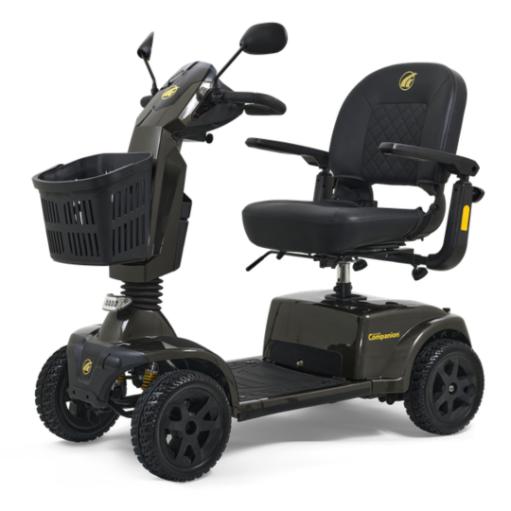
Golden Buzzaround LX
A favorite among Florida retirees, especially in coastal towns with uneven sidewalks. The Buzzaround LX shines thanks to its suspension system, which reduces strain on the lower back and hips. It stays composed when transitioning from pavement to brick, making it a reliable option for seniors who want comfort without sacrificing balance.
- Suspension for joint and spine comfort
- Stable turning on mixed surfaces
- Excellent outdoor-friendly mid-size scooter
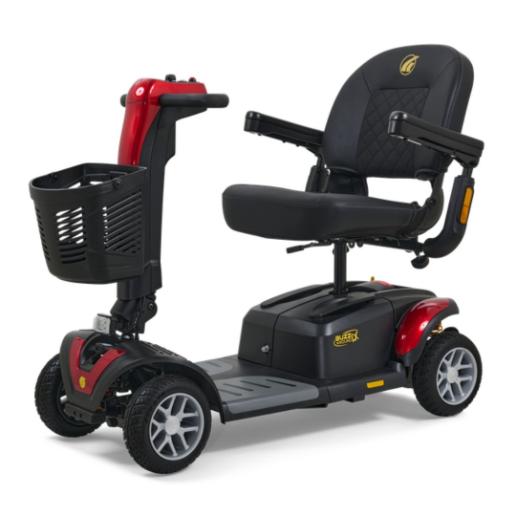
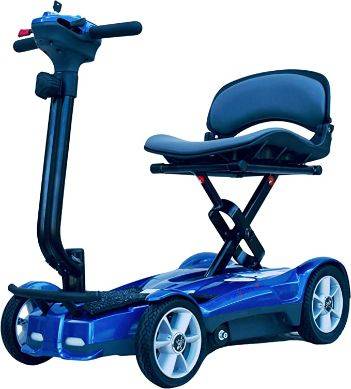
Transport 4AF Auto-Folding
Balance challenges don’t cancel wanderlust. The Transport 4AF auto-folds at the push of a button, making it ideal for seniors with limited hand strength or back issues. It fits neatly into car trunks, cruise cabins, and airport spaces—perfect for travelers who refuse to slow down.
- Hands-free auto-folding design
- Airline and cruise-friendly size
- Great for theme parks and travel days
HD / Heavy-Duty Mobility Scooters
Heavier scooters aren’t a drawback—they’re ballast. Seniors recovering from stroke, neuropathy, or balance disorders often benefit from the added weight and torque. The captain-style seating improves trunk stability, while the powerful motors handle slopes with confidence.
- Higher weight capacity
- Improved ground grip and balance
- Best choice for maximum stability

Matching Scooters to Real-Life Personalities & Lifestyles
This is where the fun part begins. Balance problems aren’t generic; neither are the people who live with them.
- The Grocery Shopper → Compact 4-wheel
- The Park Walker → Mid-size with suspension
- The RV Traveler → Auto-folding or travel scooters
- The “I Still Mow My Lawn” Type → Heavy-duty with torque
- The “I Don’t Leave the Condo Much” Type → Indoor-friendly compact
This isn’t official taxonomy, but honestly? It might be.
Terrain Matters More Than Most Buyers Realize
According to Harvard Health Publishing’s senior mobility article, environmental factors (terrain, incline, weather) play significant roles in mobility declines among aging adults.
Sidewalks are the biggest villains here—uneven slabs, dips, tree roots—small things for a college kid, hazardous for someone with neuropathy.
Grass, gravel, and steep driveways are worst on stability. Every mobility dealer knows the look when an elderly customer says, “I thought they were all the same.” No ma’am, they are not.
Training & Confidence: The Secret Sauce Nobody Talks About
There’s a reason therapists emphasize practice routes. Balance isn’t purely physical—confidence drives behavior. Seniors who do a few parking lot laps before tackling Publix tend to stick with scooters longer and avoid falls.
A trick borrowed from occupational therapists:
“Teach the turns first, not the forwards.”
The turn is where stability is won or lost.
The Real-World Buying Checklist (Because Specs Alone Can Mislead You)
A funny thing happens when seniors shop for mobility scooters—everyone gets hung up on maximum range and battery wattage. Not unimportant, but range doesn’t matter if you can’t safely execute a 90-degree turn into your kitchen without taking out the coffee table.
A much better set of questions to ask:
✔ Where will I drive this most often?
(Grocery store? Cruise ship? Sidewalk? All of the above?)
✔ How’s my balance when I turn left vs right?
(Stroke survivors often have asymmetry in movement)
✔ What’s the steepest slope in my life?
(A driveway counts. So do wheelchair ramps.)
✔ Can I lift the heaviest piece?
(Travel scooters can be deceptive here—small doesn’t always mean light)
✔ Am I planning for today or for my future self?
(Little secret: mobility needs rarely reverse course as we age)
Internal vs External Environments — Terrain Dictates More Than Diagnoses Do
This is where lifestyles and medical needs meet halfway. Two seniors with identical balance issues may require completely different scooters simply because one lives in a beach town (hello sidewalks and sand) and the other lives in a sixth-floor condo with immaculate hallways.
From the Suncoast Mobility blog, the post comparing indoor vs outdoor mobility models (internal link) does a tidy job explaining why mid-size scooters with suspension make more sense for uneven terrain, even if the rider’s medical condition is mild.
Quick Terrain Rules of Thumb:
- Carpet & tile → compact
- Sidewalks & brick → mid-size suspension
- Grass, gravel, slopes → heavy-duty outdoor
- Cruise ships & airports → auto-folding travel
It sounds simplistic. It isn’t. Terrain dictates torque, torque dictates stability, and stability dictates fall prevention. The clinical world cares about fall risk; the consumer world cares about comfort. Both point to the same conclusion here.
Mistakes Seniors (and Their Kids) Make When Choosing Scooters
I’ve watched this play out dozens of times — well-meaning adult children trying to help their parents stay independent, and unintentionally buying the wrong equipment.
Three mistakes tend to repeat:
❌ Mistake #1 — Buying Too Small
Compact scooters are wonderful, but not if the rider has neuropathy, significant tremors, or weak core stability. Light chassis = light stability.
❌ Mistake #2 — Ignoring Seat Design
Stroke recovery patients tend to lean. Arthritis sufferers fidget. Seats matter more than motors.
❌ Mistake #3 — Forgetting About Future Decline
Mobility is rarely static past 70. Buying “just enough for now” can be short-lived thinking.
The Suncoast Mobility educational content often bridges these caregiver tensions by showing product categories instead of models—an easier mental framework when comparing “compact vs midsize vs heavy duty.”
Maintenance + Training: The Rehab Perspective
Rehab specialists (and geriatricians) emphasize training because the scooter becomes part of the patient’s extended nervous system. Not in the sci-fi sense—more in the “coordination + confidence” sense.
A mini “mobility warm-up” clinic often includes:
- practicing slow turns
- braking at different speeds
- navigating curbs
- tight reverse maneuvers
- slope starts (for driveways)
Battery maintenance and tire pressure checks are equally practical. Pneumatic tires lose pressure, and low PSI increases wobble—something balance-compromised seniors do not need.
For mechanically inclined readers, Suncoast’s maintenance tips section and battery replacement blog are helpful primers.
Price, Insurance, and Realistic Expectations
Mobility scooters fall into an awkward category in the U.S. insurance ecosystem. Medicare typically covers durable medical equipment, but scooters are frequently excluded unless extremely medically necessary. The Medicare mobility equipment guidelines paint that picture clearly.
Many families end up paying cash, which is partly why the mid-market segment (not too cheap, not too luxe) has exploded. Travel scooters cater to retirees with wanderlust; heavy-duty scooters cater to those aging in place; compacts hit the day-to-day suburban errand use.
FAQ's
Generally yes—especially on shaky sidewalks or outdoor terrain. Clinicians often prefer 4-wheel scooters for stroke recovery and neuropathy because improved side-to-side stability helps reduce fall risk.