







Table of contents
Introduction: Why Mobility Scooters Matter More Than Ever in 2026
In 2026, Medicare Approved Mobility Scooters 2026 are no longer viewed simply as convenience devices — they are essential tools that restore independence, confidence, and safety for seniors and individuals living with mobility limitations. With life expectancy increasing and more Americans choosing to stay in their homes as they age, personal mobility has become one of the most important aspects of long-term quality of life.
According to national health trends, joint conditions such as arthritis, neurological disorders, and age-related muscle weakness continue to impact millions of people across the country. These conditions make walking even short distances difficult and dangerous. Falls are now one of the leading causes of injury among older adults, and reduced mobility often leads to isolation, depression, and declining physical health.
Mobility scooters directly address these challenges by giving people the ability to move freely, conserve energy, and navigate their environment safely. As demand grows for Medicare Approved Mobility Scooters 2026, more seniors are discovering how these devices restore independence and confidence in everyday life.
Understanding Medicare’s Role in 2026 for Mobility Aid Coverage
Medicare remains the backbone of affordable access to mobility equipment for seniors in the United States. In 2026, Medicare continues to classify Medicare Approved Mobility Scooters 2026 as Durable Medical Equipment (DME) when medically necessary. This classification recognizes that scooters are not luxury items, but medical tools essential for mobility and independence.
For many seniors living on fixed incomes, the cost of purchasing a mobility scooter outright can be financially overwhelming. Medicare helps bridge this gap by covering a significant portion of the approved cost, making life-changing mobility equipment much more accessible.
Medicare Advantage plans have also grown in popularity and, in many cases, offer more flexibility than standard Medicare Part B. Many Advantage members use Medicare Approved Mobility Scooters 2026 through networks that offer expanded coverage or model selections, depending on their plan.
Medicare Mobility Scooter Policies in 2026: What You Need to Know
Medicare Part B Coverage
Medicare Part B provides coverage for mobility scooters as long as the device is deemed medically necessary and prescribed by a physician. This includes qualifying Medicare Approved Mobility Scooters 2026 purchased through suppliers that are officially approved by Medicare. Part B recognizes mobility scooters as Durable Medical Equipment (DME) because they address essential medical needs, helping beneficiaries maintain independence and safety within their home.
Under this plan, beneficiaries are typically responsible for:
Meeting their annual deductible – Before Medicare begins paying its share, you must meet your Part B deductible for the year.
Paying 20% coinsurance – After the deductible is met, Medicare usually covers 80% of the approved scooter cost, leaving you responsible for the remaining 20%.
Using an approved supplier – To ensure coverage, scooters must be purchased through a Medicare-approved supplier. Using an out-of-network vendor can result in denied claims or full out-of-pocket costs.
It’s important to note that Medicare Part B coverage is intended specifically for scooters that are necessary for indoor mobility. Scooters purchased primarily for outdoor or recreational use generally do not qualify. By focusing on medically necessary, in-home mobility solutions, Part B ensures beneficiaries have safe, reliable equipment that supports daily life without unnecessary expense.

Medicare Advantage (Part C) Coverage
Medicare Advantage plans (Part C) are offered through private insurance companies that are approved and regulated by Medicare. These plans often provide additional benefits and flexibility compared to standard Part B coverage, making them a popular choice for seniors seeking Medicare Approved Mobility Scooters 2026.
Many Medicare Advantage plans offer advantages such as:
Wider model selection – Some plans cover a broader range of scooters, including upgraded features, heavy-duty models, or travel-friendly options that may not be available under standard Part B coverage.
Lower out-of-pocket expenses – Certain plans reduce copays or coinsurance amounts, helping beneficiaries access mobility scooters more affordably.
Faster approvals – Streamlined plan processes and dedicated case managers often allow quicker review of documentation and faster delivery of approved scooters.
However, it’s important to remember that some Medicare Advantage plans may enforce stricter eligibility guidelines or limit coverage to specific suppliers or models. To avoid surprises, carefully review your plan documents, understand any restrictions, and confirm coverage details with both your insurer and supplier before purchasing a scooter.
What Qualifies as “Medically Necessary” in 2026
For Medicare to cover a mobility scooter, your physician must confirm that your medical condition significantly limits your ability to walk or move safely, and that alternative mobility aids—such as walkers, crutches, or canes—are insufficient for your daily needs. This documentation is a critical part of qualifying for Medicare Approved Mobility Scooters 2026.
Medicare typically considers a scooter medically necessary if the individual:
Cannot safely walk on their own – Even short distances pose a risk without a mobility device.
Is at high risk of falls – A scooter helps reduce the chance of injury from falls, which are a leading cause of hospitalizations among older adults.
Has difficulty reaching essential areas of the home – This includes key locations like the bathroom, kitchen, or bedroom where independence is vital.
Depends on assistance for everyday movement – The scooter enables safer, more independent daily activity.
It is essential that the physician explicitly states that the scooter is required primarily for indoor mobility, rather than for outdoor convenience or recreational use alone. Proper medical documentation not only ensures compliance with Medicare guidelines but also improves the likelihood of timely approval, helping seniors regain independence safely and efficiently.
Durable Medical Equipment (DME) Explained
Medicare defines Durable Medical Equipment (DME) as items that meet specific criteria designed to support medical needs and daily living. To qualify as DME, an item must:
-
Be reusable – The equipment should withstand repeated use over time, rather than being disposable.
-
Have a medical purpose – The item must address a specific medical condition, injury, or limitation, rather than serving solely for convenience or comfort.
-
Be used in the home – DME is intended to assist with mobility, daily tasks, or safety within the home environment.
-
Provide long-term benefit – The equipment should support ongoing independence and quality of life, not just offer temporary relief.
Mobility scooters meet these requirements when prescribed for individuals with limited mobility, making Medicare Approved Mobility Scooters 2026 eligible for coverage. They must be medically necessary and address a diagnosed condition, rather than simply providing lifestyle enhancement.
This classification ensures that mobility scooters are subject to strict safety standards and medical oversight, giving beneficiaries reliable, durable equipment that truly supports daily living. By regulating scooters as DME, Medicare ensures both the safety and efficacy of the devices for those who need them most.
Eligibility Requirements for Medicare Coverage in 2026
Doctor’s Prescription
A formal prescription from a licensed physician is required for Medicare to consider coverage of a mobility scooter. The prescription must clearly outline how your limited mobility affects daily activities, such as cooking, bathing, or moving between rooms. This document serves as the foundation of your Medicare claim and is essential for establishing medical necessity.
Proof of Mobility Limitation
Medical evaluations must demonstrate that walking, even with the use of aids like canes, crutches, or walkers, is unsafe or insufficient. Your physician will document physical or neurological limitations, balance issues, or fall risks that justify the need for a scooter. Detailed medical evidence improves the likelihood of timely approval.
In-Home Use Requirement
Medicare focuses on indoor mobility, so Medicare Approved Mobility Scooters 2026 must be necessary for safe movement within the home. Scooters intended primarily for outdoor or recreational use typically do not qualify. Your doctor’s documentation should explain how the scooter will improve your daily independence, reduce fall risk, and support essential home activities.
Meeting these three requirements is critical to ensure that your scooter is eligible for coverage and that the approval process proceeds smoothly.

Types of Medicare-Approved Mobility Scooters in 2026
Three-Wheel Scooters
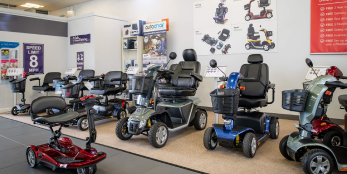
Three-wheel scooters are compact, lightweight, and highly maneuverable, making them ideal for indoor use where space is limited or sharp turns are common. Their smaller footprint allows them to navigate narrow hallways, tight corners, and crowded rooms more easily than larger models. Many seniors prefer three-wheel scooters for apartments, condos, or smaller homes because they are easy to store, move, and transport. Despite their compact design, modern three-wheel scooters still provide comfortable seating, stable controls, and sufficient range for daily indoor tasks.
Four-Wheel Scooters
Four-wheel scooters are built for stability, making them the preferred choice for outdoor use or homes with uneven surfaces. The extra wheel provides a wider base, better balance, and enhanced safety on sidewalks, driveways, and grass. These scooters are equipped with stronger motors and larger tires, which allow them to handle slopes, inclines, and minor obstacles more effectively. While slightly larger than three-wheel models, four-wheel scooters still offer indoor usability and are ideal for seniors who want the flexibility to move comfortably both inside and outside the home.
Heavy-Duty Scooters
Heavy-duty scooters are designed for individuals who need higher weight support or require a more rugged vehicle for extended use. These models feature reinforced frames, stronger drivetrains, larger motors, and extended battery life. Many heavy-duty scooters also come with wider, more cushioned seats and enhanced suspension for a smoother ride. They are excellent for seniors who spend significant time outdoors, enjoy longer trips, or need extra stability due to physical conditions. Heavy-duty scooters offer both durability and comfort, ensuring safe and reliable mobility even in more demanding environments.
Foldable and Travel Scooters
Foldable and travel scooters are specifically engineered for portability without sacrificing comfort or performance. These scooters can quickly collapse or be disassembled for storage in car trunks, RVs, or airplane cargo areas, making them perfect for seniors who travel frequently. Despite their compact design, travel scooters often include durable batteries, ergonomic seating, and sufficient range for short outings or indoor use. They are ideal for those who want the convenience of mobility at home and on the go, allowing independence even during trips or vacations.
How to Get a Mobility Scooter Through Medicare in 2026
Step 1: Medical Evaluation
The process begins with a face-to-face evaluation by your physician. During this appointment, the doctor will assess your mobility limitations, balance issues, and overall physical condition. They will document why a mobility scooter is medically necessary, specifically for indoor use, and provide detailed notes to support your Medicare claim. This evaluation is crucial, as it establishes the foundation for approval.
Step 2: Paperwork Submission
Once your doctor completes the evaluation and writes a prescription, all required forms must be submitted to Medicare for review. This includes documentation of medical necessity, prescription details, and any supporting medical records. Medicare carefully examines the paperwork to ensure all criteria for Durable Medical Equipment (DME) coverage are met. Accurate and complete submissions reduce the risk of delays or denials.
Step 3: Supplier Selection
To guarantee coverage, you must purchase your scooter through a Medicare-approved supplier. Approved suppliers are familiar with the program’s requirements, can assist with documentation, and provide models that meet Medicare standards. Using an in-network supplier not only ensures your scooter qualifies for coverage but also reduces the likelihood of claim denial or unexpected out-of-pocket expenses.
By following these three steps carefully, seniors and individuals with mobility challenges can navigate the Medicare approval process more efficiently and secure the mobility scooter they need with confidence.
Costs and Coverage Breakdown in 2026
Medicare generally covers 80% of the approved cost of a mobility scooter once your annual Part B deductible has been met. This ensures that beneficiaries receive significant financial assistance while still sharing a small portion of the cost.
Example Cost Breakdown
Scooter price: $2,000
Medicare-approved amount: $1,500
Medicare pays (80% of approved amount): $1,200
You pay (20% coinsurance): $300
It’s important to note that the approved amount may be lower than the retail price, especially for premium or specialized models. In these cases, higher-end scooters may result in additional out-of-pocket expenses beyond the coinsurance.
Some Medicare Advantage plans or supplemental insurance policies may cover part of these additional costs, reduce copays, or offer coverage for upgraded models. Checking your plan details and consulting with approved suppliers can help you better understand total expenses and make informed decisions.
Popular Mobility Scooter Brands Covered by Medicare in 2026
Several reputable brands are commonly covered under Medicare and are trusted for their reliability, comfort, and safety features.
Pride Mobility
Pride Mobility is a leading name in the industry, known for scooters that combine durability with modern technology. Their models often include ergonomic seating, long-lasting batteries, and smooth ride performance. Pride scooters are available in both indoor and outdoor configurations, making them versatile for daily use.
Golden Technologies
Golden Technologies offers a wide range of scooters, including heavy-duty and long-range models. These scooters are designed for stability, comfort, and extended use, making them ideal for seniors who spend significant time outdoors or need higher weight capacities. Many models also feature advanced suspension and user-friendly controls.
Drive Medical
Drive Medical focuses on affordability without sacrificing quality. Their scooters are widely available and come in a variety of sizes and configurations to suit different mobility needs. Drive Medical scooters are known for ease of assembly, lightweight designs, and reliable performance, making them a practical choice for many Medicare beneficiaries.
EV Rider
EV Rider is recognized for innovative designs and advanced features. Their scooters often include longer battery life, enhanced maneuverability, and smart technology integrations. EV Rider models are especially popular for users seeking portability, travel-friendly designs, or enhanced comfort features.
Each of these brands offers models emphasizing comfort, reliability, and technology integration, ensuring that beneficiaries can find a Medicare Approved Mobility Scooter 2026 that fits their specific lifestyle and mobility needs.
Choosing the Right Scooter in 2026
Choosing the right mobility scooter ensures comfort, safety, and long-term satisfaction. In 2026, there are more scooter options available than ever, making it important to match the model to your lifestyle and daily environment.
Indoor or outdoor use should be your starting point. Compact scooters are ideal for small homes, apartments, and areas with narrow hallways or tight corners. Larger, four-wheel models are better suited for outdoor use, offering stronger motors, bigger tires, and better stability on uneven surfaces like sidewalks, grass, or gravel.
Travel use is an important consideration for frequent travelers. Foldable or disassembling scooters fit easily into most vehicles, making transportation simple. Lightweight designs are perfect for those who want portability without sacrificing reliability.
Weight capacity and comfort directly impact safety and performance. Heavy-duty models are designed for users who need higher weight support, offering reinforced frames, wider seats, stronger drivetrains, and better suspension. A well-fitted scooter improves posture, reduces fatigue, and enhances overall mobility.
Choosing a scooter that matches your needs ensures better performance, longer lifespan, and greater daily independence.
Common Medicare Coverage Challenges
Even with clear eligibility, obtaining Medicare coverage for a mobility scooter can sometimes be challenging. Some of the most common obstacles include:
Rejected paperwork
Incomplete or incorrect documentation is the leading cause of denied claims. Missing signatures, insufficient medical notes, or unclear statements of medical necessity can all result in delays or rejection. Ensuring that your physician’s forms are complete and accurate is critical.
Supplier shortages
Medicare requires that scooters be purchased from approved suppliers. Occasionally, certain models may be out of stock, or local suppliers may have limited inventory, causing delays in receiving your equipment. Planning ahead and confirming availability can help reduce waiting times.
Plan restrictions
Medicare Advantage and some Part B plans may limit which models or features are covered, or impose stricter eligibility rules. Comparing your plan’s coverage options before purchasing a scooter can prevent unexpected costs or denied claims.
Working with experienced dealers who understand Medicare requirements can improve approval rates, guide you through the paperwork process, and help you select the right scooter that meets both your needs and plan guidelines.
Even if Medicare coverage is not available or your request is denied, there are several alternative options to help you obtain a mobility scooter:
Medicaid
Many state Medicaid programs offer coverage for mobility scooters or similar Durable Medical Equipment. Eligibility, coverage limits, and application processes vary by state, so it’s important to check your local program’s requirements. Medicaid can often cover scooters for seniors or individuals with disabilities who meet medical necessity criteria.
VA Programs
Veterans may qualify for mobility scooters through the Department of Veterans Affairs (VA). VA benefits often cover the cost of medically necessary scooters and may include additional support, such as repairs, maintenance, or training, with lower out-of-pocket expenses compared to standard Medicare.
Private Insurance
Some private insurance plans or supplemental health policies provide partial reimbursement for mobility scooters. Even if Medicare denies coverage, private insurance may cover a portion of the cost if medical necessity is documented.
Payment Plans
Financing and payment plan options make scooters more accessible for those paying out of pocket. Many dealers, including Suncoast Mobility, offer flexible plans to spread the cost over time, ensuring you can get the mobility equipment you need without financial strain.
Exploring these alternatives can help ensure access to mobility solutions even when Medicare coverage is not available.
Medicare Updates in 2026
Medicare has made several important improvements in 2026 to increase access, reduce delays, and enhance safety for mobility scooter users.
Improved supplier oversight helps protect beneficiaries from low-quality equipment and fraudulent vendors. Medicare has strengthened monitoring requirements for approved suppliers to ensure they meet service standards, provide compliant equipment, and maintain ethical billing practices. This results in better product quality, more reliable service, and greater accountability.
Battery technology upgrades reflect advancements in safety and performance. Newer scooters now feature longer battery life, faster charging times, and improved temperature tolerance. These changes mean fewer charging interruptions, greater range per use, and more dependable operation for daily needs.
Simplified approval systems reduce paperwork and processing delays. Medicare has streamlined documentation workflows using digital submission and verification methods. Physicians and suppliers can now submit required forms electronically, making approvals faster and more efficient.
Faster claims processing improves turnaround times for reimbursement and equipment delivery. Medicare has increased automation and data integration within its claims systems, allowing fewer errors, shorter hold times, and quicker equipment access for approved beneficiaries.
These upgrades make the process easier, faster, and more reliable for seniors and individuals relying on mobility scooters for independence.
Tips for Faster Approval in 2026
Getting approval from Medicare can feel overwhelming, but following a few proven strategies can help reduce delays and improve your chances of success.
Accurate documentation is the most important factor in avoiding delays or denials. Your doctor’s notes must clearly explain why the scooter is medically necessary for in-home use. Incomplete paperwork is the leading cause of rejections, so double-check that all forms are properly filled out, signed, and supported by medical records.
In-network vendors ensure smoother processing and fewer surprises. Always purchase through Medicare-approved suppliers, as out-of-network vendors can result in denied coverage or unexpected costs. Approved suppliers also understand Medicare requirements and often assist with paperwork.
Frequent follow-ups keep your application moving. Don’t assume paperwork is being processed properly—call your doctor, supplier, or Medicare carrier to confirm that all forms have been received. Simply checking in can prevent your request from getting stuck due to missing information.
A proactive approach can dramatically shorten approval times and help you get your scooter faster with fewer frustrations.
Safety and Maintenance Tips
Keeping your mobility scooter well-maintained is essential for long-term safety, reliability, and performance. As scooter technology continues to advance in 2026, proper care plays an even greater role in preventing breakdowns and ensuring dependable daily use.
Regular servicing helps identify wear and potential issues early. Have your scooter inspected at least once a year (or every six months for frequent use) to check brakes, tires, wiring, lights, and steering components.
Battery care is critical to performance and lifespan. Fully charge after use, avoid letting batteries run completely empty, store in a temperature-controlled space, and always use the manufacturer’s recommended charger.
Secure storage protects your scooter from damage and theft. Store indoors when possible, park on level surfaces, remove the key, use a lock in public areas, and cover the unit when storing long-term.
With consistent care, your mobility scooter will remain safe, efficient, and ready to support your independence every day.
Suncoast Mobility Doesn't Accept Insurance
At Suncoast Mobility, we do not accept insurance as a form of payment. Instead, we work directly with each client, providing a detailed proof of purchase that can be submitted for reimbursement—many clients find that Medicare often covers up to 80% of eligible mobility devices. To make our products more accessible, we offer flexible financing options and discounts on select models, helping clients invest in a high-quality mobility device while staying within their budget.
As an A+ BBB accredited company, we take pride in our reputation for excellent customer service, reflected in our numerous 5-star reviews across multiple platforms. As a small, family-owned business, we are committed to providing personalized support, expert guidance, and a friendly, trustworthy experience for every client. This combination of quality products, reliable service, and family-owned care ensures that choosing Suncoast Mobility is both safe and rewarding for all your mobility needs.
FAQs – Medicare Mobility Scooters in 2026
How long does approval take?
2–6 weeks
Will Medicare pay for outdoor scooters?
Only if needed for in-home mobility.
Can I select any scooter?
Limited by plan and supplier network.
Will Medicare cover maintenance?
Some repairs are covered.
Can I upgrade?
Yes, by paying the difference.
Does Suncoast Mobility accept insurance?
No, Suncoast Mobility does not bill insurance directly for mobility scooters. However, we provide discounts, flexible financing options, and all necessary documentation so clients can submit claims for possible reimbursement.
Final Thoughts
Mobility scooters in 2026 are more than medical devices — they are tools of freedom, confidence, and independence. For seniors and individuals with mobility challenges, the right scooter can completely transform daily life by restoring the ability to move safely, socialize freely, and remain active without relying on others.
Understanding how Medicare coverage works, choosing the right model, and following proper maintenance and safety practices can make the process far less stressful and far more rewarding. While navigating insurance and approvals may seem overwhelming at first, being informed gives you control and clarity — and that makes all the difference.
Whether you are exploring Medicare options, purchasing privately, or seeking reimbursement, the most important step is taking action. Mobility should never be a limitation to living life fully, and with today’s technology and support, independence is more achievable than ever.
Although Suncoast Mobility does not bill insurance directly, we are committed to making mobility equipment affordable and accessible. We offer competitive pricing, special discounts, and flexible financing options to help reduce out-of-pocket costs. In addition, we can provide all the required documentation and invoices needed for you to submit a claim for possible reimbursement through your insurance, Medicare Advantage plan, or other assistance programs. Our team is happy to guide you through the process so you can focus on getting the mobility solution you need with confidence and peace of mind.
If you or a loved one are considering a mobility scooter, now is the time to invest in comfort, safety, and freedom — and enjoy life without limits in 2026 and beyond.